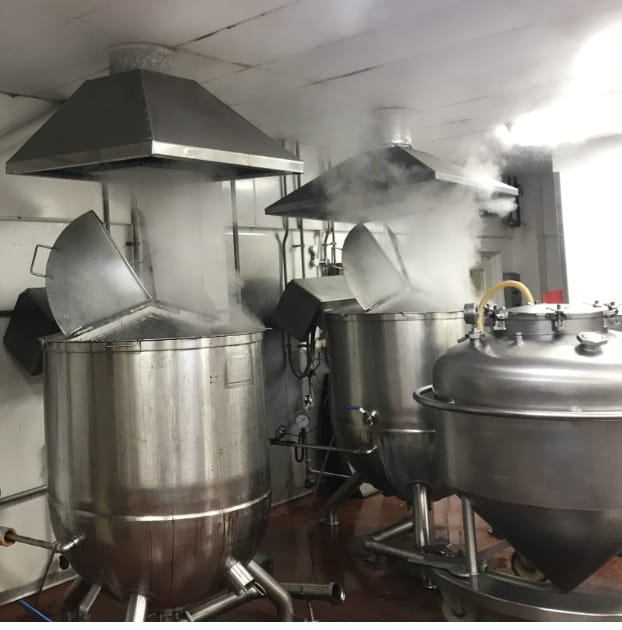
LEV Testing: Thorough Examination and Test, UK-Wide

LEV testing, formally a Thorough Examination and Test (TExT), checks that a Local Exhaust Ventilation (LEV) system still captures and controls airborne contaminants as designed. It’s a legal requirement under COSHH Regulation 9 for most LEV systems, carried out at least every 14 months by a competent person.

We provide UK-wide LEV thorough examinations and test, carried out by P601 and P602-trained engineers, with a clear report setting out any actions needed to keep your system compliant.

LEV technician using a pitot tube and manometer to measure gas velocity
Picture of two receptor hood type LEVs. One is working correctly one is not.

What Is LEV Testing and Thorough Examination?

A thorough examination verifies that an LEV system still captures dusts, fumes, vapours, and mists as effectively as it did when it was designed and commissioned. It’s a statutory check, not a general maintenance visit: it confirms the system continues to protect employee health, and identifies where performance has drifted from that original design intent.

COSHH Regulation 9: Your Legal Duties

COSHH Regulation 9 requires every LEV system to undergo a Thorough Examination and Test at least every 14 months. Higher-risk processes may need more frequent testing. Employers must keep records for a minimum of five years and ensure the system continues to control exposure to a safe level.

The examination must be carried out by a competent person. Our engineers meet HSG258’s competence criteria, including BOHS-recognised training such as P601.

Why LEV Testing Matters

An underperforming LEV system doesn’t announce itself. Workers can be exposed to harmful airborne substances for months before a drop in capture efficiency becomes obvious, carrying a real risk of occupational lung disease and other long-term ill health.

Beyond the health risk, an overdue or failed examination is one of the easiest things an HSE inspector can spot on a site visit, and enforcement tends to follow quickly once a system is shown to be non-compliant. Regular examination catches drift before either risk materialises.

What Our LEV Examination Covers

Check What It Confirms
Hood and extraction point inspection Correct positioning, condition, and free movement of air into the hood
Duct velocity (m/s) Adequate transport speed to carry dust and fume through the ductwork
Face and capture velocity Effective contaminant capture at the point of generation
Static and differential pressure Fan and filter condition, and whether the system is performing as designed
Filter condition Loading, damage, or incorrect installation
Fan speed and direction Correct operating performance
Smoke or tracer testing (where appropriate) Visual confirmation of airflow pattern and direction
Control effectiveness Overall system performance against design and HSG258 benchmarks

Every measurement is taken with calibrated instruments and recorded against your system’s original design specification.

Technician taking face velocities using a hot wire anemometer
Technician inspecting the filters on a dust collector

How We Carry Out Your LEV Examination Onsite

We begin by reviewing the system layout: hoods, ductwork, filters, and fans. Using calibrated instruments, we measure airflow performance at each test point and compare the results against design specifications and HSG258 benchmarks. Every test point is photographed, and all measured values are recorded in your final report.

Common LEV Issues We Identify

We frequently identify:

  • Reduced airflow caused by blockages or filter loading
  • Damaged or incorrectly positioned hoods
  • Leaks or corrosion in ductwork
  • Fans running slow or incorrectly wired
  • Incorrectly specified filters, wrong type or size
  • Poor system maintenance or missing documentation

Early detection prevents system failure, protects employees, and is almost always cheaper than dealing with a full breakdown later.

What You Receive in Your LEV Test Report

Your report includes:

  • System identification and asset details
  • Hood-by-hood airflow measurements
  • Duct velocity and pressure readings
  • Photographs of test points and hoods
  • Assessment against design and benchmark requirements
  • Pass or fail outcome for each hood
  • Remedial actions and prioritised recommendations
  • Next test due date (14-month statutory interval)

Reports are written to be fully compliant with HSG258 and COSHH Regulation 9, and usable as evidence at inspection.

Malfunctioning LEV system
Synergy Environmental LEV Report

How to Prepare for Your LEV Test

A few simple steps help the examination run smoothly and give the most accurate result. Before your test, please ensure:

  • The LEV system is powered and accessible
  • All hoods and ductwork are reachable
  • Filters are clean or appropriately loaded
  • The LEV logbook and previous reports are available
  • Any recent modifications to the system are disclosed
  • Processes are running under normal operating conditions

Why Choose Synergy for LEV Testing

Our LEV engineers are trained to P601 and P602 competence standards, with experience applying HSG258 across manufacturing, welding, woodworking, and pharmaceutical sites. Our occupational hygiene consultants use calibrated instruments throughout, provide clear reports with prioritised recommendations rather than just raw data, and offer fast UK-wide service tailored to your site and industry.

Synergy LEV Pass and Fail stickers
Synergy consultants discussing results

Frequently Asked Questions

Is LEV testing a legal requirement?

Yes. Under COSHH Regulation 9, employers must have LEV systems thoroughly examined and tested at least every 14 months, and the requirement applies regardless of industry or company size.

How often does an LEV system need testing?

Every LEV system must undergo a Thorough Examination and Test at least every 14 months under COSHH Regulation 9. Higher-risk processes may need more frequent testing.

What does the LEV examination include?

It includes airflow measurements, capture velocity checks, duct velocity readings, filter condition checks, fan performance assessment, photographs, and a full control effectiveness review.

Who can carry out an LEV thorough examination?

LEV examination must be carried out by a competent person. Our engineers meet HSG258’s competence criteria and hold recognised training such as BOHS P601.

What happens if my LEV system has never been tested before?

We carry out a full baseline examination against HSG258 benchmarks and your system’s design specification, then start the ongoing 14-month cycle from there. It’s the same process as a routine re-test, just with more to establish on the first visit.

What if my extraction system fails its examination?

You’ll receive clear remedial actions, including airflow improvements, hood positioning guidance, filter changes, or duct repairs. We can retest once the remedial work is complete.

Can you test multiple LEV systems in one visit?

Yes. Most site visits cover every LEV system on site in a single visit, scheduled around your production process to minimise disruption.

What will my LEV report include?

Your report includes measured airflow data, hood performance, duct velocities, photographs of test points, a pass/fail assessment, recommended actions, and your next test due date.

How much does LEV testing cost?

Cost depends on the number of systems and hoods on site and how accessible they are, so we can’t quote a flat figure. Send us your system details and we’ll provide a clear quote before any work begins.

Book Your UK-Wide LEV Testing & Examination

Need a COSHH-compliant LEV test? We provide fast nationwide service with clear, practical reporting.

Trusted by UK manufacturers, engineering firms, warehouses, food producers and national employers.

Related Services

Workplace Exposure Monitoring

Workplace exposure monitoring for airborne contaminants. Comply with COSHH Regulation 10 and protect your employees’ health.

Workplace Exposure Monitoring >>

Workplace Noise Monitoring

Noise Assessment and Monitoring Services to measure the personal noise exposure of your workers.

Noise Assessment & Monitoring >>

Face Fit Testing

Fit testing verifies whether masks and respirators form an effective seal against the face.

Face Fit Testing >>

Biological Monitoring

Using biological samples like blood, urine, or breath to assess exposure to hazardous substances.

Biological Monitoring >>

HAVs Testing

Hand-arm vibration (HAV) occurs when power tools or machinery transmit vibrations to your hands and arms.

HAVs Testing

Silica Dust Monitoring

Protect your workforce from silicosis, lung cancer and other serious lung diseases with professional Respirable Crystalline Silica (RCS) / Silica Dust Monitoring

Silica Dust Monitoring >>

Inhalable and Respirable Dust Monitoring

Protect your workforce and meet COSHH requirements with professional Inhalable and Respirable Dust Exposure Monitoring

Inhalable and Respirable Dust

Isocyanate Monitoring

Protect your workforce from asthma and sensitisation with expert Isocyanate Exposure Monitoring.

Isocyanate Monitoring

Solvent and VOC Monitoring

Protect your workforce from harmful solvent vapours with professional Solvent and VOC Exposure Monitoring.

Solvent and VOC Monitoring